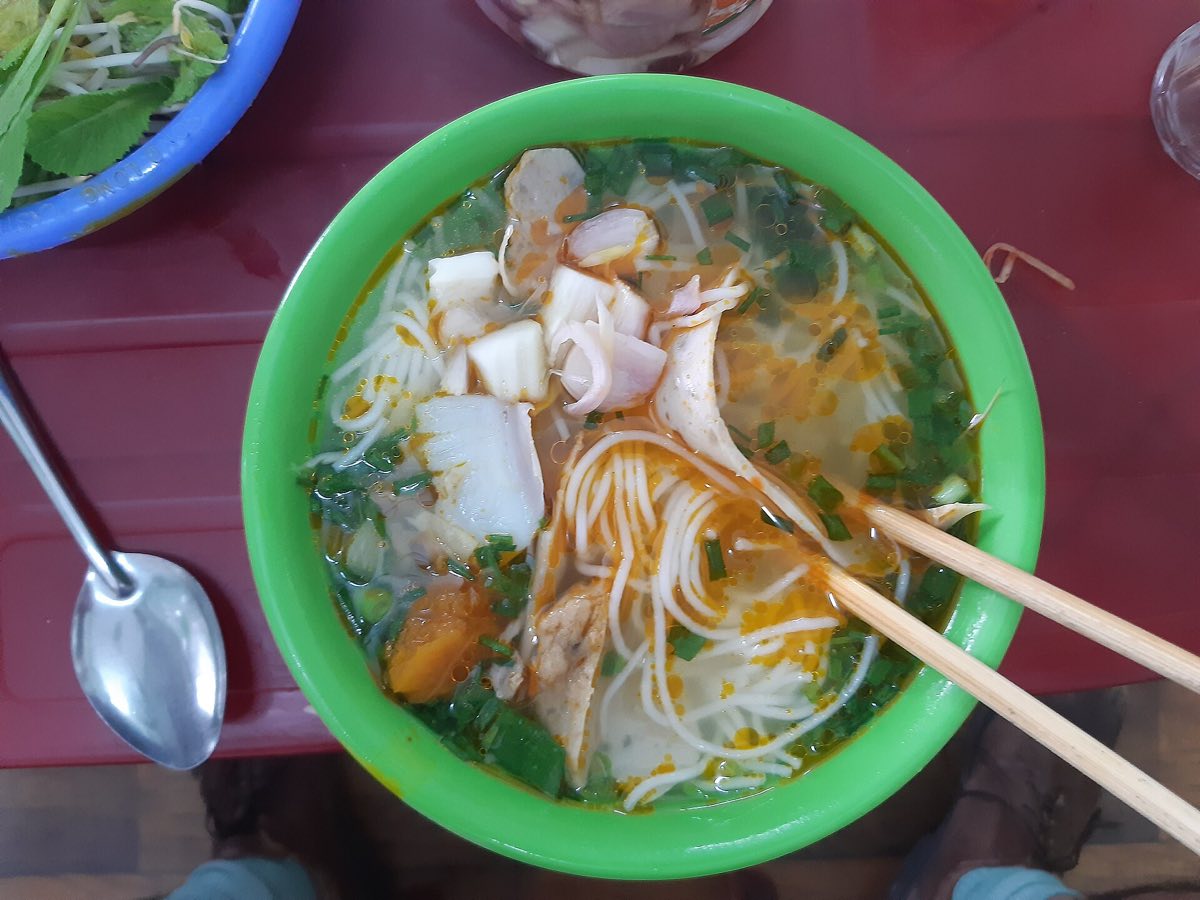
Da Nang Food: The Ten Dishes, the Shops That Make Them, and What They Cost
Da Nang is quietly one of Vietnam's best eating cities, and it has a canon of its own — mì Quảng, bún chả cá, bánh xèo with nem lụi, bánh tráng cuốn thịt heo — that overlaps almost nowhere with what you eat in Hanoi or Saigon. Since the Michelin Guide arrived in June 2024 the city has gone from 36 entries to 44+ in 2026, and the striking part is what those entries charge: most listed shops sell a bowl for 25,000–70,000₫, about $1–3. Two rules decide whether you eat well here. Eat breakfast and lunch dishes at breakfast and lunch — the best shops genuinely sell out, several by 13:00. And treat the beachfront seafood barns as the one place where the bill needs watching.
Why the food here is the reason to stay in Da Nang
The city loses the charm argument to Hoi An and it loses the nightlife argument to almost everywhere. It wins the food argument outright, and it is not particularly close.
Central Vietnamese cooking is its own thing: hotter, saltier, more fermented, built around mắm nêm (fermented anchovy) and turmeric rather than the delicate northern broths or the sweet southern ones. Da Nang and the old Quảng Nam province behind it are where that cooking lives, and since the July 2025 merger the two are legally one city. What that means at street level is a menu you will not have eaten before, at prices that look like a misprint.
The benchmark to hold in your head: a bowl of mì Quảng runs 25,000–70,000₫ — one to three dollars — and that band covers everything from a plastic-stool shop on Hoàng Diệu to a Bib Gourmand address with a queue outside. Bún chả cá is 15,000–45,000₫. Bánh xèo is 7,000–20,000₫ a piece. A full bánh xèo and nem lụi feed for two comes to about 120,000₫ (~$4.70). The only dishes that cost real money are the DIY pork rolls at the tourist-facing branches and the seafood, and both have a cheaper version a few streets back.
The second thing to understand is the clock. Most of the famous shops are single-dish, single-shift operations. Bún chả cá is breakfast and the good pots are empty by mid-morning. Mỳ Quảng Sứa Hồng Vân sells out of the jellyfish version by about 13:00. Ốc hút is a late-afternoon beer ritual. If you turn up at 20:00 expecting the canon, you will end up eating at whatever is still open — usually Korean barbecue, which is fine, but is not why you came. Start with the ten dishes, ranked, then read the individual pages for the addresses.
The ten Da Nang dishes, priced, with where and when
This is the whole menu in one screen. Prices are what a Vietnamese customer pays at the shops named — the Michelin-listed ones charge the same as their neighbours, which is the entire point of a Bib Gourmand. Times matter more than they do anywhere else in Vietnam.
| Dish | Price | Where | When to eat it | Verdict |
|---|---|---|---|---|
| Mì Quảng turmeric noodles, semi-dry, sesame cracker | 25,000–70,000₫ (~$1–2.75) | Mì Quảng 1A (1A Hải Phòng) · Hồng Vân (59C Lê Hồng Phong) · Quê Xưa (165–167 Núi Thành) | Breakfast to early lunch. The jellyfish version is gone by ~13:00 | WORTH IT |
| Bún chả cá fish-cake noodle soup, sweet-sour broth | 15,000–45,000₫ (~$0.60–1.75) | Nguyễn Chí Thanh street — 109 at #109, Hờn in alley 113/3 | Breakfast, 06:00–10:00. This is not a dinner dish | WORTH IT |
| Bánh xèo + nem lụi crispy turmeric crepes, lemongrass pork skewers | 7,000–20,000₫ a piece (60,000–120,000₫ a feed) | Bà Dưỡng, end of alley K280/23 Hoàng Diệu · Bánh Xèo 76 (85A Lê Văn Hưu) | Lunch or early evening. Bà Dưỡng gets rammed 11:30–13:00 | WORTH IT |
| Bánh tráng cuốn thịt heo DIY rice-paper pork rolls with mắm nêm | 60,000–160,000₫ (~$2.35–6.30) | Đặc Sản Trần (4 Lê Duẩn) · Quán Đại Lộc (97 Trưng Nữ Vương) · Quán Mậu, since 1962 | Lunch or dinner. The one dish that works late | DEPENDS |
| Bún mắm nêm dry noodle salad, fermented anchovy sauce | 25,000–40,000₫ (~$1–1.60) | The Trần Kế Xương / Đoàn Thị Điểm alley — Bún Mắm Vân at 23/14, and Con Market upstairs | All afternoon. Order the heo quay (roast pork) version | DEPENDS |
| Bánh canh thick chewy tapioca noodle soup | 15,000–40,000₫ (~$0.60–1.60) | Bánh Canh Yến, 253 Nguyễn Hoàng (Bib-listed) · Nga on Nguyễn Chí Thanh · crab versions everywhere | Breakfast, or a late-night bowl | WORTH IT |
| Ốc hút chilli-lemongrass snails you suck from the shell | 25,000–50,000₫ a plate (~$1–2) | Điện Phương (304/1 Điện Biên Phủ) · Hạnh (31 Sư Vạn Hạnh) · Phạm Hồng Thái at night | 16:00 onwards, with cold beer. That is the whole ritual | WORTH IT |
| Kem bơ blended avocado over coconut ice cream | 8,000–30,000₫ (~$0.30–1.20) | Bắc Mỹ An Market — Kem Bơ Cô Vân (since 1992) and Cô Cúc | Afternoon, in the heat. It is a dessert, not a drink | WORTH IT |
| Bánh mì que skinny charcoal-crisped pâté sticks | 5,000–12,000₫ (~$0.20–0.50) | Bánh Mì Bà Lan, 62 Trưng Nữ Vương · Cô Tiên, 80 Trần Phú · Cô Thông, 24 hours | Any time. Two or three is a snack, five is lunch | WORTH IT |
| Bánh tráng kẹp grilled rice paper, pâté, quail egg | Street-snack pricing (a few thousand đồng a piece) | Dì Em, 252 Nguyễn Hoàng · Dì Hoa, Michelin Selected 2026 | Late afternoon and evening, standing up | WORTH IT |
Prices checked August 2026 against the research dossier and current local listings, converted at 25,500₫ to the dollar. Cash is still king at every shop on this table — the Michelin sticker in the window does not mean they take a card.
Every Da Nang food page on this site, ranked by how much it will change your trip
What to eat in Da Nang — the ten dishes, ranked
Start here if you have three days and want to eat the canon without wasting a meal. Each dish with the shop to eat it at, the price and the hour of the day it exists.
Mì Quảng, decoded
The flagship, and the dish that most separates this coast from the rest of Vietnam: turmeric noodles barely wet in a concentrated broth, peanuts, herbs and a sesame cracker you snap over the top. Seven variations including jellyfish, eel and frog.
The Michelin file — 1 Star, Vietnam's first Green Star and 45 cheap shops
The full roll: every Bib Gourmand from 2024, 2025 and 2026 with prices, the Selected list, La Maison 1888's ~6,000,000₫ tasting menu and Nén's Green Star. The punchline is that most of it costs under $3.
Bún chả cá — the breakfast bowl and the street that owns it
Nguyễn Chí Thanh is effectively the bún chả cá street, with two Bib Gourmand shops within 100m of each other. Light sweet-sour broth of tomato, pineapple and pumpkin, golden fish cakes, and it is over by mid-morning.
Bánh xèo and nem lụi — the alley, and the copycats in it
Bánh Xèo Bà Dưỡng sits at the end of alley K280/23 Hoàng Diệu and has 5,000+ Google reviews. Several shops in the same alley are counting on you not knowing which door is which. How to eat it, and where else is better.
Surviving the seafood strip
The page that saves you money. Three strips at three price points, the five questions that stop a three-million-đồng bill, and the fishing-village shop where a Michelin-listed dinner costs 60,000–100,000₫ a plate.
The café scene — Chiang Mai by the sea
A genuine destination coffee city: XLIII roasting Panama Geisha in a koi-pond pavilion, salt coffee imported wholesale from Huế, egg coffee in eggcups, and rooftops overlooking the airport runway.
The Korean quarter
A million Korean arrivals in the first seven months of 2025 and roughly 150 flights a week have produced a de facto K-town along Phạm Văn Đồng and An Thượng 4. The best late food in the city, and the friction discourse handled honestly.
Bánh mì que and the snack canon
The skinny pâté sticks at 5,000–12,000₫, the TikTok-famous grilled rice paper, chè, Huế rice cakes, a 50-year-old Bib Gourmand bún bò shop and the snail plates that are really an excuse to drink beer at 17:00.
Markets and food streets
Con Market is the food hall, Han Market is the souvenir one, and Bắc Mỹ An is the snack market where kem bơ actually comes from. Plus the breakfast street, the evening grill street and the zone under the bridge.
Bánh tráng cuốn thịt heo — the expensive street dish
Boiled pork, twenty herbs, two kinds of rice paper and a bowl of fermented anchovy sauce you either love or cannot get near. Trần is the tourist default at roughly double the neighbourhood price.
Vegan and chay in Da Nang
Buddhist chay culture makes this one of the easiest cities in Asia to eat vegan cheaply, with two Bib Gourmand vegetarian restaurants. Learn the two lunar days when every chay shop in the city is full.
Cooking classes — the rainy-day play
Market tour, three to five dishes, recipes to take home. The single best use of a wet October morning in a city where 650mm of rain falls that month.
Four figures that explain eating here
Every recommendation on this cluster falls out of one of these.
What has actually changed in the last two years
Eight shifts, and between them they explain most of what you will notice on the ground.
The Michelin halo. The guide landed in June 2024 and the effect on the cheap end was immediate: Korean and Taiwanese tour groups now queue at Bib Gourmand shops that had never seen a queue in fifty years of trading. Bún Chả Cá 109 is the clearest case — the tourist-famous one, while locals walk 100m up the same street to Bún Chả Cá Hờn, which also has a Bib.
The salt-coffee wave. Cà phê muối is a Huế invention and between 2024 and 2026 it comprehensively conquered Da Nang. Salted-cream coffee is now on essentially every menu in the city, and it has spawned salt matcha and salt cocoa. Related: matcha mania arrived at the same time and has not left.
Specialty coffee matured. XLIII (the former 43 Factory) is now the most famous roaster in Vietnam outside Saigon, and the city has a proper third-wave layer under it — Àla pouring Panama Geisha out of an alley off Nguyễn Chí Thanh, O2o First Roast, Brewman, The Local Beans. See the café page.
Korean-isation accelerated. Whole blocks of Phạm Văn Đồng and Hồ Nghinh now trade in Korean first and Vietnamese second. The Korean quarter page covers what that means for you, including the fact that it is the reason anything is open at 02:00.
Fine dining is being built out. Nén — Vietnam's first Michelin Green Star — has been expanding, and a Nobu is in the pipeline attached to a tower development. Against that, La Maison 1888 has held its Star three years running with tasting menus from about 6,000,000₫ (~$235).
The viral snack economy. Bánh tráng kẹp, ram cuốn cải and kem bơ are the number one Da Nang food content on TikTok, and the Michelin inspectors validated the genre in 2026 by putting Dì Hoa on the Selected list. Meanwhile delivery is fully entrenched — GrabFood and ShopeeFood will bring you a 30,000₫ bowl of anything, which is worth knowing in October when it rains 650mm.
Learn to cook it, or get walked around it
Neither of these is necessary — you can eat superbly here for 50,000₫ a meal with nothing booked. What they buy is the market vocabulary and someone to order the divisive stuff for you, which is worth more on day one than on day five.
Da Nang food FAQ
What food is Da Nang famous for?
Mì Quảng above everything — turmeric-yellow wide noodles served semi-dry in a small amount of concentrated broth, with peanuts, herbs and a sesame cracker. After that: bún chả cá (fish-cake noodle soup), bánh xèo with nem lụi, bánh tráng cuốn thịt heo (DIY pork rolls with fermented anchovy sauce) and seafood. All of them are central Vietnamese dishes you will not find done properly in Hanoi or Saigon.
How much does food cost in Da Nang?
Signature dishes run 25,000–70,000₫, about $1 to $3, and that includes the Michelin Bib Gourmand shops. A full bánh xèo and nem lụi feed for two is around 120,000₫ (~$4.70). The expensive exceptions are bánh tráng cuốn thịt heo at the tourist branches (60,000–160,000₫) and beachfront seafood, where 200,000–350,000₫ a head is normal and the bill needs checking.
Does Da Nang have Michelin restaurants?
Yes. Da Nang entered the Michelin Guide in June 2024 with 36 entries and has 44+ in 2026. There is one Star — La Maison 1888 at the InterContinental, with tasting menus from about 6,000,000₫ — and Vietnam's first Green Star, awarded to Nén in 2024 and held since. The other 40-odd are Bib Gourmand and Selected street shops charging 25,000–70,000₫ a dish.
What time do Da Nang food shops open and close?
Earlier than you expect. Bún chả cá is a breakfast dish sold roughly 06:00–10:00. Mì Quảng runs breakfast into early lunch, and Mỳ Quảng Sứa Hồng Vân sells out of the jellyfish version by about 13:00. Bánh xèo works lunch and early evening. The reliably late food is Korean barbecue on Phạm Văn Đồng, which runs to 03:00.
Is street food in Da Nang safe to eat?
Broadly yes, and the busy shops are the safe ones — high turnover means nothing sits. The two things worth caution about are raw dishes (gỏi cá Nam Ô is raw anchovy) and ice from unmarked sources, though commercial tube ice is standard now. Mắm nêm, the fermented anchovy sauce, is not a hygiene problem; it is just strong.
Where do locals actually eat in Da Nang?
Nguyễn Chí Thanh for bún chả cá, Hoàng Diệu and Trưng Nữ Vương for mì Quảng and bánh mì, the Trần Kế Xương alley for bún mắm nêm, Con Market's hawker alley from 15:00, and the Mân Thái and Thọ Quang fishing-village seafood shops rather than the Võ Nguyên Giáp beachfront barns. As a rule, one block inland from the beach halves the price.
Can you eat well in Da Nang as a vegetarian?
Unusually well. Buddhist chay culture means dedicated vegetarian restaurants in every district with rice plates at 15,000–35,000₫, and two of them hold Bib Gourmands — Shamballa (2025) and Ngọc Chi (2024). The catch is that mắm nêm and fish sauce are in almost everything at a normal shop, so ask for chay explicitly.
Should I book a food tour or a cooking class in Da Nang?
Neither is required and both are useful on day one rather than day four. A cooking class runs $25–45 with a market trip and four to five hours, and it is the best rainy-day activity in the city. A scooter food tour buys you seven shops and someone who can order the pungent things for you.
inland and eat
for half.
The single biggest lever on your food budget here is where you sleep. The Vo Nguyen Giap beachfront puts you next to the seafood barns and the resort restaurants; Hai Chau on the city side puts you within a 20,000₫ bike ride of Con Market, the bun cha ca street, Mi Quang 1A and the banh xeo alley, and it is cheaper per night as well. An Thuong splits the difference and has the cafe scene. Beachfront four-stars run $40–60 and the city side runs less.
Compare Da Nang hotels