Da Nang's Korean Quarter: the K-Town Nobody Writes About in English
Korea is Da Nang's number one source market and it is not close: a million Korean arrivals in the first seven months of 2025 alone, on roughly 150 flights a week. The local joke is that the city is “Gyeonggi-do Da Nang City” — a province of greater Seoul. That volume has produced a genuine K-town along Phạm Văn Đồng, Hồ Nghinh, Dương Đình Nghệ and An Thượng 4: Korean signage, Korean marts, and barbecue restaurants that run to about 03:00, which in a city where the Vietnamese kitchens shut by 21:00 makes this the default answer to late hunger. Buffets start around 350,000₫ (~$14). There is also a real and much-discussed friction debate, and this page reports it rather than pretending it does not exist.
Da Nang is, statistically, a Korean beach town
Western guides describe Da Nang as an emerging destination that Westerners have not heard of. From the ground, that framing is backwards: this city has been comprehensively discovered, just not by the people writing the guides.
Korea has been Da Nang's largest source market since 2016. In the first seven months of 2025 the city received one million Korean arrivals, carried by about 150 flights a week — a schedule denser than most European capitals manage to any Asian city. Korean visitors come for golf, beach, family holidays and honeymoons, and increasingly for wellness rather than packaged tours.
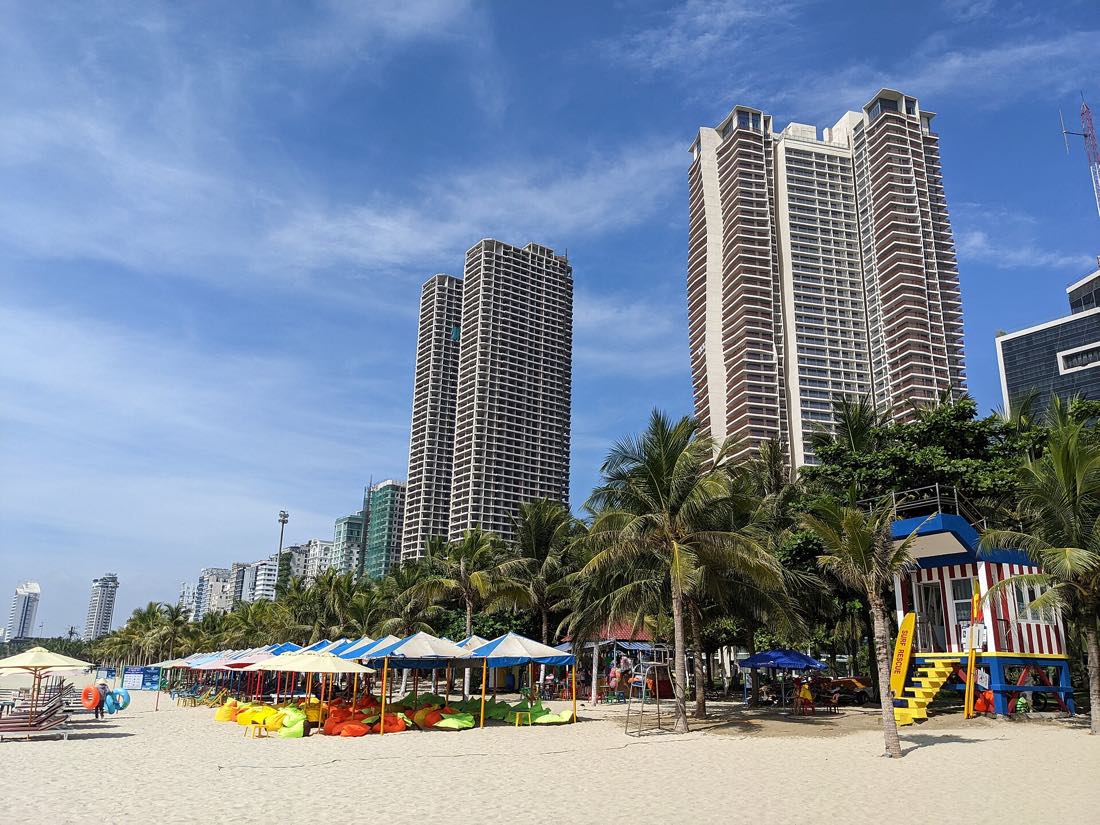
The result is a de facto Korean quarter with no official boundary, running along Phạm Văn Đồng and Hồ Nghinh behind the northern beach, out along Dương Đình Nghệ, and with a second cluster on An Thượng 4 in the An Thuong grid. In those blocks the signage is Korean first, the convenience stores stock Korean brands, the karaoke rooms are Korean-run, and the restaurants keep Korean hours.
Two things follow that matter to you specifically, whatever passport you hold. First, this is where the late food is. Vietnamese kitchens in Da Nang shut early — the famous shops are done by 13:00 and the dinner places wind down by 21:00. Korean barbecue runs to roughly 03:00, every night. Second, Korean demand is why the beachfront works in the rain, which is covered further down and is the single most useful thing on this page if you are travelling between November and March.
Why the Korean quarter exists
Four figures that explain the signage, the hours and the winter room rates.
The Korean quarter, restaurant by restaurant
Barbecue is the anchor, and the format is the Korean one: you cook it yourself over a burner set into the table, with a spread of banchan side dishes that keeps being refilled. This is the best-value large meal in Da Nang after the fishing-village seafood.
| Where | The strip | What it is | Price | Verdict |
|---|---|---|---|---|
| Korean Market Restaurant | Phạm Văn Đồng area | One of the anchor KBBQ rooms of the quarter, running late and busy with Korean groups rather than with tourists doing a novelty dinner. That is the signal you want. | Mid | WORTH IT |
| HANMAEUM | Korean quarter | Another of the established barbecue names in the cluster. Table burners, banchan, soju, and staff who will cook it for you if you look like you are about to ruin the pork belly. | Mid | WORTH IT |
| GUPGO | Korean quarter | Barbecue in the same tier. The practical way to choose between these three is which one is nearest and which one is full — a full Korean restaurant at 23:00 is the entire recommendation. | Mid | WORTH IT |
| GAINN | Rooftop | The rooftop option, which changes the format from a smoky basement to an open-air evening. Worth it for the view rather than for a materially different plate of meat. | Mid | DEPENDS |
| One BBQ | Korean quarter | The buffet, and the reason a large group ends up here. All-you-can-eat barbecue, which in this city is a genuinely aggressive value proposition. | 350,000₫ (~$14) | WORTH IT |
| Korean marts | Phạm Văn Đồng · An Thượng 4 | Convenience stores stocking Korean instant noodles, snacks, soju and banchan. Useful well beyond novelty if you are self-catering, and open far later than a Vietnamese minimart. | Retail | WORTH IT |
| An Thượng 4 | The An Thuong grid | The second cluster, walkable from the An Thuong hostels and bars rather than out on the beach road. Smaller, more mixed, and the easier one to wander into on foot. | Mid | WORTH IT |
| Compare Da Nang restaurants | Reviews and hours | Worth using here more than anywhere else on this site, because the Korean quarter's restaurants review heavily in Korean and English and barely at all in Vietnamese food blogs. Check current hours before a 23:00 walk. | Browse restaurants | WORTH IT |
Checked August 2026. Per-restaurant pricing across the quarter is not systematically published beyond the One BBQ buffet at about 350,000₫; KBBQ generally sits well above street-food prices and well below the beachfront seafood barns. Most of these rooms take cards, which is unusual for Da Nang.
There is a debate about this, and it deserves reporting rather than editing out
If you read about Da Nang on Reddit you will eventually hit a thread about Korean tourists. Pretending otherwise would be dishonest, and so would repeating the worst of it.
What exists: a much-discussed r/danang thread — around 92 points and 103 comments — about friction between visitors, with the specific complaints being queue-cutting and crowding at hotel buffets. It is one of the most-engaged threads in that subreddit and it comes up regularly in searches about the city.
What is also true, and gets lost when the thread is quoted elsewhere: the discussion itself is nuanced. A substantial share of the comments push back, point out that the same behaviours get attributed to whichever group happens to be the largest in any given resort town, note that a million arrivals in seven months means the visible population skews heavily one way for reasons of arithmetic rather than culture, and observe that Vietnamese queueing norms are not the ones being used as the benchmark. It is a real argument with real people on both sides, not a consensus.
The practical version for a traveller, stripped of the argument: Da Nang's beachfront hotels are built around large-group Northeast Asian tourism, and buffet breakfast between about 07:30 and 09:00 is the crush point. If that would bother you, eat at 07:00 or at 09:30, or skip the hotel breakfast entirely and go and eat bún chả cá for 30,000₫, which is better food than any hotel buffet in this city and is what the food pages here would tell you to do regardless.
We are not going to write a page telling you what to think about a nationality. The thread exists, it is worth knowing it exists, and the honest summary is that it describes a crowding problem in a city that received 17 million visitors in 2025, not a national characteristic.
Korean demand is the reason the beachfront works in the monsoon
This is the genuinely useful, entirely unromantic consequence of the numbers above, and almost nothing in English says it.
Da Nang's rain is brutally seasonal. October alone brings about 650mm, November about 430mm, and storms run to around 10 December. In a normal beach town that is a dead season: restaurants shutter, hotels run skeleton staff, half the beachfront closes for renovation.
That does not happen here, and the reason is the Korean winter-escape season, which runs November to March. While Western visitors avoid the monsoon, Korean arrivals climb precisely because Seoul is below freezing and Da Nang is 22–25°C and wet. The beachfront stays open, staffed and trading through the wettest months on the calendar.
What that buys you concretely, if you are here in the rain: full-service hotels at heavily reduced rates rather than closed ones, restaurants that are open, an airport running a dense schedule, and a functioning city. The trade is that you are sharing it with a large winter crowd and that you will not be swimming — see the rainy-season page and the month-by-month breakdown.
Da Nang's year splits cleanly in two and almost no guide says how hard. February to August is dry; September to early December is monsoon. October alone gets about 650mm of rain — more than February through August combined — with November close behind at 430mm and storms running to around 10 December. The compensation is real: typhoons here pass in a day or two, the city drains fast, and 5-star rates can halve. But if you are coming for the beach, late February to April is the answer and it is not close.
The Korean quarter, practically
Should you eat in the Korean quarter?
Nothing here needs booking. Two adjacent things are worth it.
Korean barbecue in Da Nang is walk-in, cash-or-card, and no reseller sells a table. What is worth planning around this quarter is where you sleep and what you do with the hours before 21:00, because that is the gap this district fills rather than the whole evening.
Korean quarter FAQ
Where is the Korean quarter in Da Nang?
There is no official boundary, but the de facto K-town runs along Phạm Văn Đồng and Hồ Nghinh behind the northern beach, out along Dương Đình Nghệ, with a second smaller cluster on An Thượng 4 in the An Thuong grid. Korean signage, Korean marts and barbecue restaurants concentrate in those blocks.
Why are there so many Koreans in Da Nang?
Korea has been the city's number one source market since 2016, and there were about a million Korean arrivals in the first seven months of 2025 alone, on roughly 150 flights a week. The airport sits inside the city ten minutes from the beach, the flight is short, and the golf, resort and family-holiday offer is priced well below Korea. The local joke is “Gyeonggi-do Da Nang City”.
Where can I eat late at night in Da Nang?
The Korean quarter, where the barbecue restaurants run to about 03:00. Vietnamese kitchens close much earlier — the famous street shops sell out by 13:00 and dinner places wind down by 21:00. The other late options are Cô Thông's 24-hour bánh mì and the food zone under the Trần Thị Lý bridge, which trades to roughly 02:00.
How much is Korean barbecue in Da Nang?
The One BBQ buffet runs about 350,000₫ (~$14) a head for all you can eat, which is the benchmark. À la carte barbecue sits well above Vietnamese street prices — where a full meal is 25,000–70,000₫ — and well below the beachfront seafood barns at 200,000–350,000₫ a head.
Is there really a Korean tourist controversy in Da Nang?
There is a much-discussed r/danang thread with roughly 92 points and 103 comments about visitor friction, specifically queue-cutting and crowding at hotel buffets. The thread itself is genuinely split, with a large share of comments pushing back on the framing. The practical takeaway is that beachfront buffet breakfast between 07:30 and 09:00 is the crush point in a city that hosted 17 million visitors in 2025.
Does the Korean season affect hotel prices in Da Nang?
Yes, and in your favour if you can handle rain. Korean arrivals peak November to March, which lands on Da Nang's monsoon, so the beachfront hotels stay open and fully staffed through months that would otherwise be dead. You get full-service resorts at heavily reduced rates rather than closed ones — the trade being 430–650mm of rain and no swimming.
Is the Korean quarter worth visiting if I want Vietnamese food?
Treat it as the late-night backstop rather than the plan. Everything on the Vietnamese food pages here is finished long before the barbecue restaurants hit their stride, so the two scenes barely compete. Eat mì Quảng at 07:00 and Korean barbecue at 22:00 and you have used the day properly.
Can I use cards in the Korean quarter?
More reliably than almost anywhere else in Da Nang. The barbecue restaurants and Korean marts generally take cards, whereas the Bib Gourmand street shops, market stalls and seafood barns are overwhelmingly cash-only. Carry cash for the daytime and relax about it at night.
Pham Van Dong
if you eat late.
The Korean quarter sits directly behind the northern beach, which means the My Khe hotel wall - Four Points, Radisson, Hilton Garden Inn, A La Carte and dozens of Korean-oriented four-stars - is a walk from every restaurant on this page. Beachfront four-stars run $40-60 a night and drop sharply from November as the monsoon arrives and the Korean winter season fills them anyway. If your evening ends at 01:00, this is the side of the coast road to be on.
Compare My Khe hotels