Vegan and Vegetarian in Da Nang: Chay Culture, Two Bib Gourmands and How to Order
Da Nang has a strong Buddhist chay culture, which is a completely different thing from a Western vegan scene and much better value. Dedicated cơm chay shops exist in every district selling rice plates at 15,000–35,000₫ (about $0.60–1.40), and two of them hold Michelin Bib Gourmands: Shamballa at 277 Trần Hưng Đạo (vegan, 2025, and the vegan phở is the order) and Ngọc Chi at 202 Hoàng Diệu (2024, old school). The catch is at ordinary restaurants, where fish sauce and shrimp paste are structural rather than optional — the broths, the dipping bowls and the dressings all contain them. Ask for chay explicitly and go to a chay shop, and this city is close to effortless. Try to adapt a mì Quảng stall and it is not.
Chay is Buddhist, not lifestyle — and that works in your favour
Vietnam's vegetarian tradition comes out of Mahayana Buddhism, not out of health food, and it long predates anybody asking for oat milk. That is why it is cheap, everywhere, and unselfconscious.
Ăn chay means to eat a Buddhist vegetarian diet, and in practice it is close to what a Western reader would call vegan: no meat, no fish, no fish sauce, and traditionally no eggs or dairy either. Strict temple cooking also avoids the five pungent vegetables — garlic, onion and their relatives — on the grounds that they agitate the mind, though many commercial chay restaurants are relaxed about this. If you want to be certain, ask.
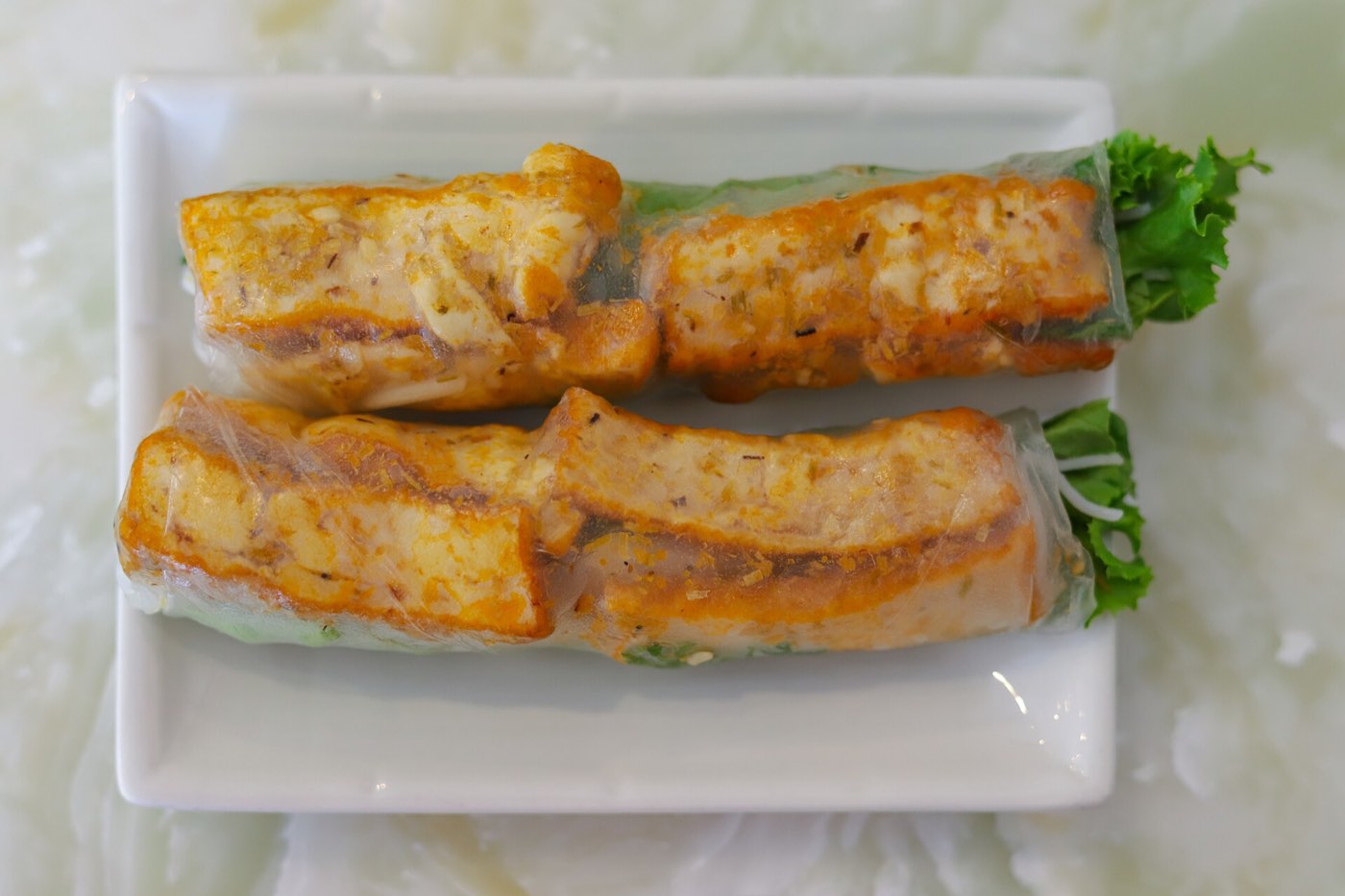
The economics follow from the religion. A cơm chay shop is a rice-plate canteen: you point at a tray of dishes behind glass, they load a plate, and it costs 15,000–35,000₫. There are dozens of them, they are not aimed at visitors, and the food is mock-meat-heavy in a way that is either delightful or exhausting depending on your taste. Tofu, gluten, mushroom and jackfruit do an enormous amount of work in this cuisine.
Above that sits a small modern tier — Shamballa, Roots, Loving Vegan — which does recognisable vegan versions of Vietnamese and Western food for a mixed audience, with menus in English and prices to match. Both tiers are worth using. The chay canteens are the better value and the better story; the modern places are easier on your first day.
One structural warning, and it is the reason this page exists. The mainstream Da Nang canon is not adaptable. Mì Quảng broth is bone-based, bún chả cá is a fish soup, bánh xèo carries prawn and pork and its dipping sauce is usually liver, and mắm nêm is fermented anchovy. Asking a specialist shop for a vegetarian version of the one dish it has made for fifty years is not going to end well for either of you.
Where to eat vegan and chay in Da Nang
Two Michelin Bib Gourmands, one modern western-facing vegan kitchen, one four-table temple-style room, and the canteen tier underneath all of it.
| Restaurant | Where | What it is | Price | Verdict |
|---|---|---|---|---|
| Shamballa | 277 Trần Hưng Đạo | Bib Gourmand 2025. Fully vegan, and the newest Michelin nod to chay cooking in the city. The vegan phở is the order and it is the dish to point visiting sceptics at. | Rice plates 15,000–35,000₫ tier | WORTH IT |
| Ngọc Chi | 202 Hoàng Diệu | Bib Gourmand 2024, and one of the original sixteen. Old-school Buddhist vegetarian — the traditional end of the spectrum, with the mock-meat repertoire done properly rather than apologetically. | Rice plates 15,000–35,000₫ tier | WORTH IT |
| Bodhicitta | City side | Four tables and floor cushions. The most temple-like room on this list and the one that feels least like a restaurant. Small, quiet and easy to miss; go early because four tables is four tables. | Chay pricing | WORTH IT |
| Roots Plant-Based | An Thượng | Western vegan — bowls, brunch, smoothies, coffee — in the An Thuong expat grid. Not Vietnamese and not trying to be. The default for a long-stay vegan who wants a break from tofu and rice. | Western pricing | DEPENDS |
| Rasoi Indian Veg | City side | Indian vegetarian, which is a genuinely useful category in a city where the Buddhist repertoire gets repetitive after a week. India is also Da Nang's fastest-growing source market, so this tier is expanding. | Mid | WORTH IT |
| Loving Vegan · Chay Corner | Across the city | The everyday modern chay tier — English menus, delivery on GrabFood and ShopeeFood, consistent. Useful in the rain, when the canteens close early and the streets flood. | Chay pricing | WORTH IT |
| Neighbourhood cơm chay canteens | Every district | The real backbone. Point-and-load rice plates behind glass, no English, no menu, no fuss. 15,000–35,000₫ and dozens of them. Look for the word chay on the sign, often with a lotus or a swastika-like Buddhist manji. | 15,000–35,000₫ (~$0.60–1.40) | WORTH IT |
| A cooking class | Market trip plus a kitchen | Most Da Nang classes will run a vegetarian version if you tell them when booking — the market walk is unchanged and the dishes get swapped. Worth flagging in advance rather than on the day. | Compare classes | DEPENDS |
Checked August 2026. The published price band for chay rice plates is 15,000–35,000₫; per-restaurant pricing for Shamballa, Ngọc Chi and Bodhicitta is not separately documented, so treat them as sitting at or a little above that canteen level — which is what a Bib Gourmand implies. Cash at the canteens; the modern places take cards.
Five things to say, and one thing to stop assuming
This is the phrase that works, because it maps onto a religious category everybody understands rather than a dietary preference that needs explaining. It is understood to exclude fish sauce automatically, which “no meat” is not.
Nước mắm is in the dipping bowls, the dressings and most broths; mắm ruốc (shrimp paste) sits on the bún chả cá table; mắm nêm (fermented anchovy) is the entire point of the pork rolls. A dish described as vegetable-based at a normal shop will still contain one of them. This is why chay places rather than adaptation is the answer.
Cơm chay, quán chay, đồ chay. Often accompanied by a lotus flower or a Buddhist manji symbol. Once you can read that one word you will start seeing these shops on every second block, which is roughly how many there are.
Vietnamese chay cooking builds elaborate imitations of pork, chicken, fish and prawn from tofu skin, wheat gluten, taro and mushroom, and it does so with real skill. If you dislike mock meat on principle, say chỉ rau và đậu — just vegetables and tofu — or go to Roots instead.
Traditional chay excludes eggs and dairy, which means most cơm chay is vegan by default rather than by request. Modern cafés and the western-facing places do use eggs, so if you are strict, ask specifically: không trứng.
Cơm chay canteens are lunch operations — the trays are loaded in the morning and the good dishes are gone by early afternoon. This is the same clock the rest of the Da Nang food scene runs on and it catches vegans out just as reliably.
Two days a month when the whole city eats chay
On the first and the fifteenth of each lunar month, a large share of Da Nang eats vegetarian — and every chay shop in the city fills up.
Mùng 1 is the first day of the lunar month, and rằm is the fifteenth, the full moon. On both, observant Buddhists eat chay, and in central Vietnam that observance is widespread rather than niche. The practical consequences run both ways.
The good news: on those two days chay options appear everywhere. Ordinary restaurants put on a chay menu, market stalls sell vegetarian versions of dishes that never have them, and the range of what you can eat expands dramatically for 24 hours. If you have any flexibility in your dates, these are the best two days of the month to be vegetarian in this city.
The bad news: the cơm chay shops are packed, the good trays empty early, and a canteen that normally trades gently until 13:00 can be cleaned out by 11:30. Go early, or go to one of the sit-down places like Shamballa where a table turns over rather than a tray running dry.
The lunar dates move against the Western calendar, so check a Vietnamese lunar calendar for the month you are travelling. The other date worth knowing is Tết, the lunar new year, when large parts of the city close entirely for several days — including a great many of the food shops recommended across these pages.
Vegan Da Nang, practically
How easy is Da Nang if you do not eat animals?
Classes will cook chay if you tell them in advance
Nothing on this page needs booking and a full plate costs under a dollar and a half. What is worth arranging ahead is a cooking class that swaps its dishes for you, because almost every Da Nang syllabus is built around pork, prawn and fish sauce unless someone is told otherwise.
Vegan Da Nang FAQ
Is Da Nang good for vegans?
Unusually good, because of Buddhist chay culture rather than any Western vegan scene. Dedicated cơm chay shops exist in every district with rice plates at 15,000–35,000₫, traditional chay excludes eggs and dairy as well as meat and fish, and two chay restaurants hold Michelin Bib Gourmands. The difficulty is at ordinary restaurants, not at chay ones.
What does chay mean?
Ăn chay is to eat a Buddhist vegetarian diet — no meat, no fish, no fish sauce, and traditionally no eggs or dairy either, which makes most of it vegan by default. Strict temple cooking also avoids garlic and onion. Look for the word chay on a sign, usually with a lotus or a Buddhist symbol.
Where are the best vegan restaurants in Da Nang?
Shamballa at 277 Trần Hưng Đạo, which holds a 2025 Bib Gourmand and where the vegan phở is the order, and Ngọc Chi at 202 Hoàng Diệu, a 2024 Bib and the old-school choice. Bodhicitta is the four-table, floor-cushion room; Roots in An Thuong is the western vegan option.
Can I ask for vegetarian versions of Da Nang dishes?
Rarely, and it is worth understanding why. Mì Quảng broth is bone-based, bún chả cá is fish, bánh xèo carries prawn and pork with a liver-based dipping sauce, and mắm nêm is fermented anchovy. Single-dish shops have made one recipe for decades and cannot swap it. Go to a chay place instead, where vegetarian versions of all of those exist.
How much does vegetarian food cost in Da Nang?
15,000–35,000₫ for a cơm chay rice plate — roughly $0.60 to $1.40, and cheaper than the meat-based street canon at 25,000–70,000₫. The Bib Gourmand chay restaurants sit at or slightly above that level, which is what a Bib is meant to signal.
What are mùng 1 and rằm?
The first and fifteenth days of each lunar month, when observant Buddhists eat vegetarian. On both, chay options appear across the whole city and ordinary restaurants put on chay menus — but the dedicated cơm chay shops are packed and the trays run out early. Go before 11:30 on those two days, or take a sit-down table.
How do I say I am vegetarian in Vietnamese?
Tôi ăn chay — I eat vegetarian. It works better than describing individual exclusions, because it names a religious category everyone recognises and is understood to rule out fish sauce automatically. Add không trứng for no eggs, and chỉ rau và đậu if you want to avoid mock meat.
Is Vietnamese vegetarian food all mock meat?
A lot of it is, and it is done with real skill — tofu skin, wheat gluten, taro and mushroom shaped into convincing pork, fish and prawn. If that is not what you want, say chỉ rau và đậu, or use the modern tier: Roots for western vegan, Rasoi for Indian vegetarian. Note that gluten-heavy mock meat makes gluten-free vegan eating genuinely hard here.
is the easy
vegan base.
Roots Plant-Based, the western cafes, the smoothie places and the specialty coffee are all inside the walkable An Thuong grid, and the beach is five to ten minutes on foot. The chay canteens and both Bib Gourmand shops are city side, a 10-minute ride away. An Thuong studios run $300-500 a month long-stay and boutique rooms $25-60 a night - and be aware that English-language listings here routinely run 30-100% over local rates, so negotiate.
Compare An Thuong stays